# How to Create a Windows 11 Bootable USB with Rufus (2026)
Canonical: https://snipgeek.com/blog/how-to-create-windows-11-bootable-usb-rufus
Locale: en
Description: Master the step-by-step process of creating a Windows 11 bootable USB using Rufus, including practical compatibility options during setup.
Date: 2026-03-08
Updated: 2026-03-19
Category: OS Installation
Tags: windows, windows-11, tutorial, rufus, bootable-usb
JSON: https://snipgeek.com/api/posts/how-to-create-windows-11-bootable-usb-rufus?locale=en
---
So, you're ready to perform a clean installation of Windows 11? Great choice! Using a USB installation media is the best way to get a fresh system free from manufacturer bloatware. And for this task, there's no better, lighter, or more user-friendly tool than **Rufus**.
This guide will walk you through the process step-by-step, from preparation to a ready-to-use USB, including useful compatibility options provided by Rufus during setup. Let's get started!
---
## #1 Key Preparation (Don't Skip!)
Before we begin, ensure you have the following ready to ensure a smooth process:
1. **USB Flash Drive:** Prepare a flash drive with at least **8 GB** capacity. Make sure it's in good condition.
2. **Windows 11 ISO File:** You'll need the Windows 11 installer file in `.iso` format.
3. **Rufus App:** Download the latest version of Rufus. We've provided a safe link below.
4. **Backup Data:** This process will **erase all data** on the flash drive. Ensure you have backed up any important files from that drive.
The steps below will fully format your flash drive. All data inside will be permanently lost. Double-check your backups before proceeding.
---
## #2 Creating the Windows 11 Bootable Drive
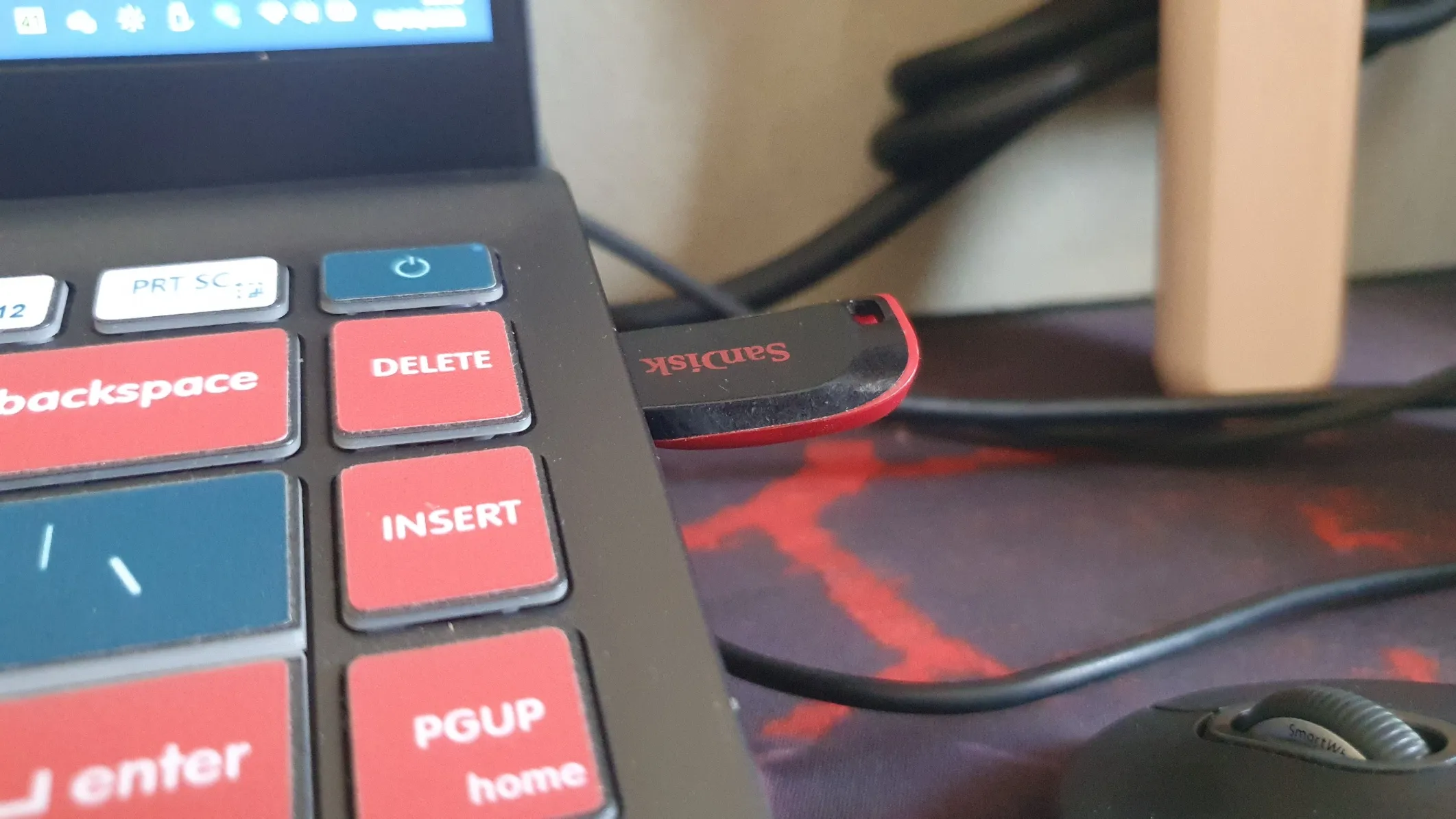
Once all preparations are complete, follow these steps:
**Open Rufus & Select Device**
Run the Rufus application you downloaded. Plug in your flash drive, and Rufus will automatically detect it in the **Device** section.
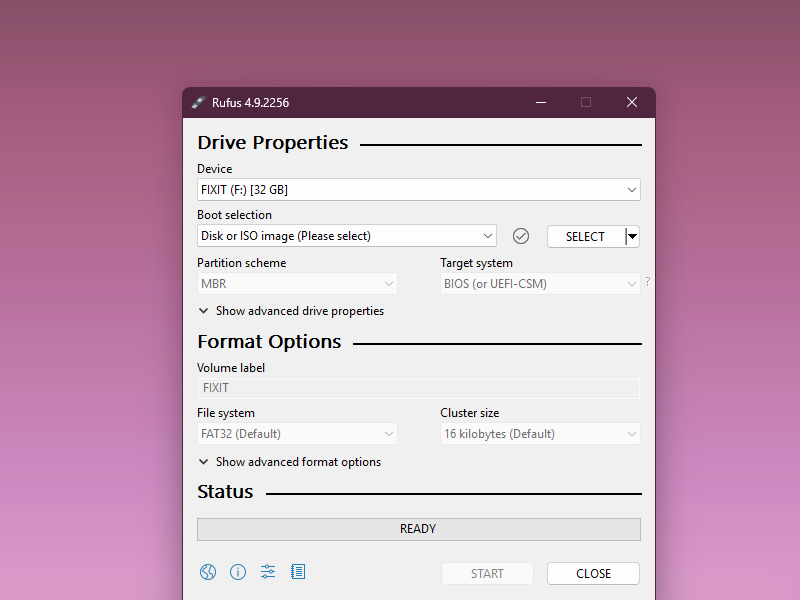
*Step 1: Ensure the correct flash drive is selected.*
**Select Windows 11 ISO File**
In the **Boot selection** area, click the **SELECT** button, then find and choose the Windows 11 `.iso` file you prepared earlier.
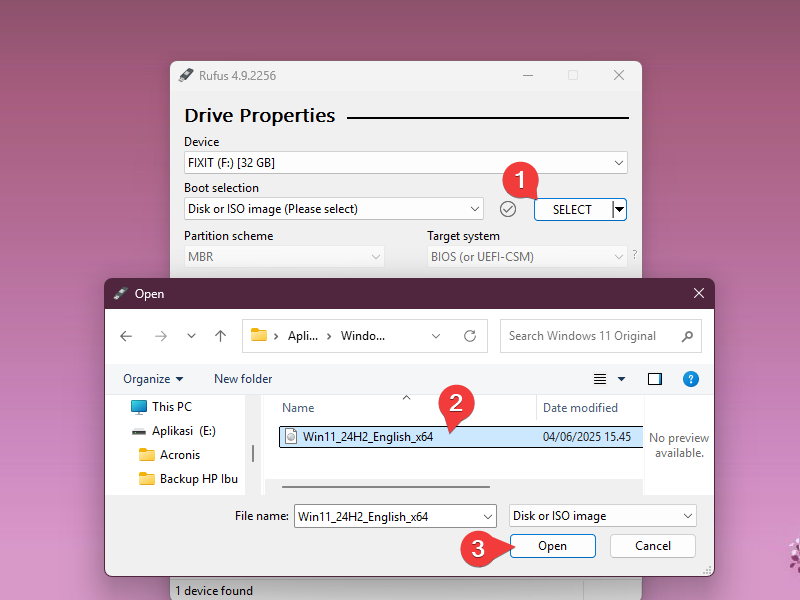
*Step 2: Choosing the Windows 11 installer file.*
**Configure Installation Options**
After selecting the ISO, Rufus will automatically adjust several options. Keep the **Partition scheme** as **GPT** and **Target system** as **UEFI**, as these are the standards for Windows 11.
**Start the Process**
Once all settings are correct, click the **START** button at the bottom.
**Windows Customization (Rufus Advanced Features)**
A "Windows User Experience" pop-up will appear. This is where Rufus's magic happens. You can choose:
* **Remove requirement for 4GB+ RAM, Secure Boot and TPM 2.0:** Use this only when you fully understand the implications and for test environments where compatibility checks are necessary.
* Other options are optional, such as automatically creating a local account.
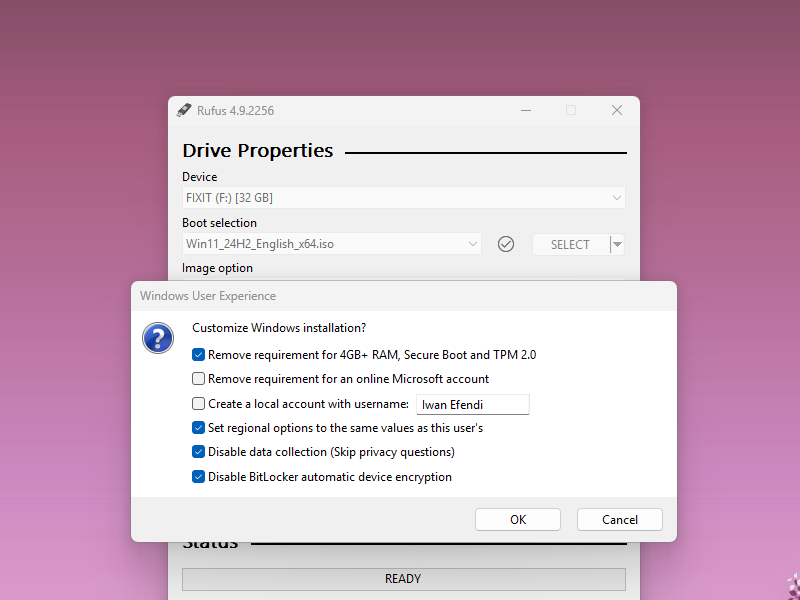
*Step 5: Review each option carefully and proceed only with settings that match your installation target.*
Click **OK** when finished.
**Wait for Completion**
Rufus will begin creating the bootable disk. This process will take a few minutes. Wait until the progress bar turns green and the status shows **READY**.
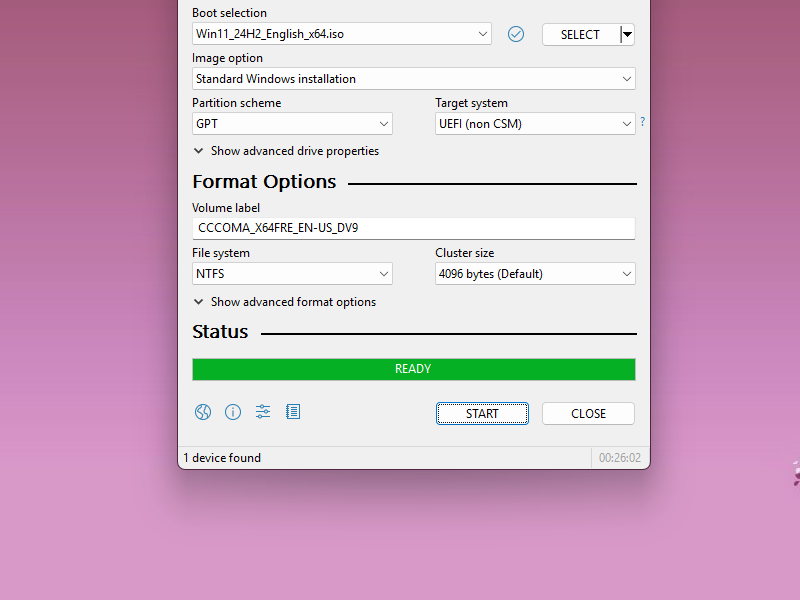
*Once the status is READY, your flash drive is good to go!*
After it's finished, you can close the Rufus app. Your Windows 11 bootable flash drive is now ready to use for a clean installation on any computer that supports the UEFI system. Easy, right?
---
## #3 Common Mistakes (and Fast Fixes)
Before you assume the USB failed, check these common issues:
1. **USB not listed in BIOS Boot Menu**
Recreate the USB and make sure **Partition scheme = GPT** for UEFI systems.
2. **Boot starts but installer crashes early**
Redownload the ISO and verify checksum if available. Corrupted ISO files are a frequent cause.
3. **"This PC can't run Windows 11" appears**
This usually means your hardware checks are active. Use Rufus compatibility options only for test/lab scenarios where you understand the trade-offs.
4. **USB creation stops at a certain percentage**
Try another USB port (preferably USB 2.0 for stability) and avoid running heavy background disk tasks.
---
## #4 BIOS/UEFI Checklist Before Install
Use this quick checklist so installation starts on the first try:
* Boot mode is set to **UEFI** (not Legacy/CSM).
* Your USB is prioritized in the boot menu.
* Secure Boot state matches the installation plan.
* SATA mode (AHCI/RAID) is known before setup, especially on laptops.
These 4 checks prevent most "USB works on one PC but not another" cases.
---
## #5 Dual-Boot Safety Note (Windows + Linux)
If your target machine is dual-boot (for example Windows 11 + Ubuntu), avoid deleting partitions blindly during setup.
Safe approach:
1. Identify the current Linux partitions first.
2. Install Windows only to the intended partition/disk.
3. Expect the bootloader to change after installation; plan to repair GRUB from Linux live USB if needed.
This keeps your dual-boot migration cleaner and reduces post-install recovery work.