Is 16GB RAM Obsolete? Why 32GB is the New Standard
Iwan Efendi4 min
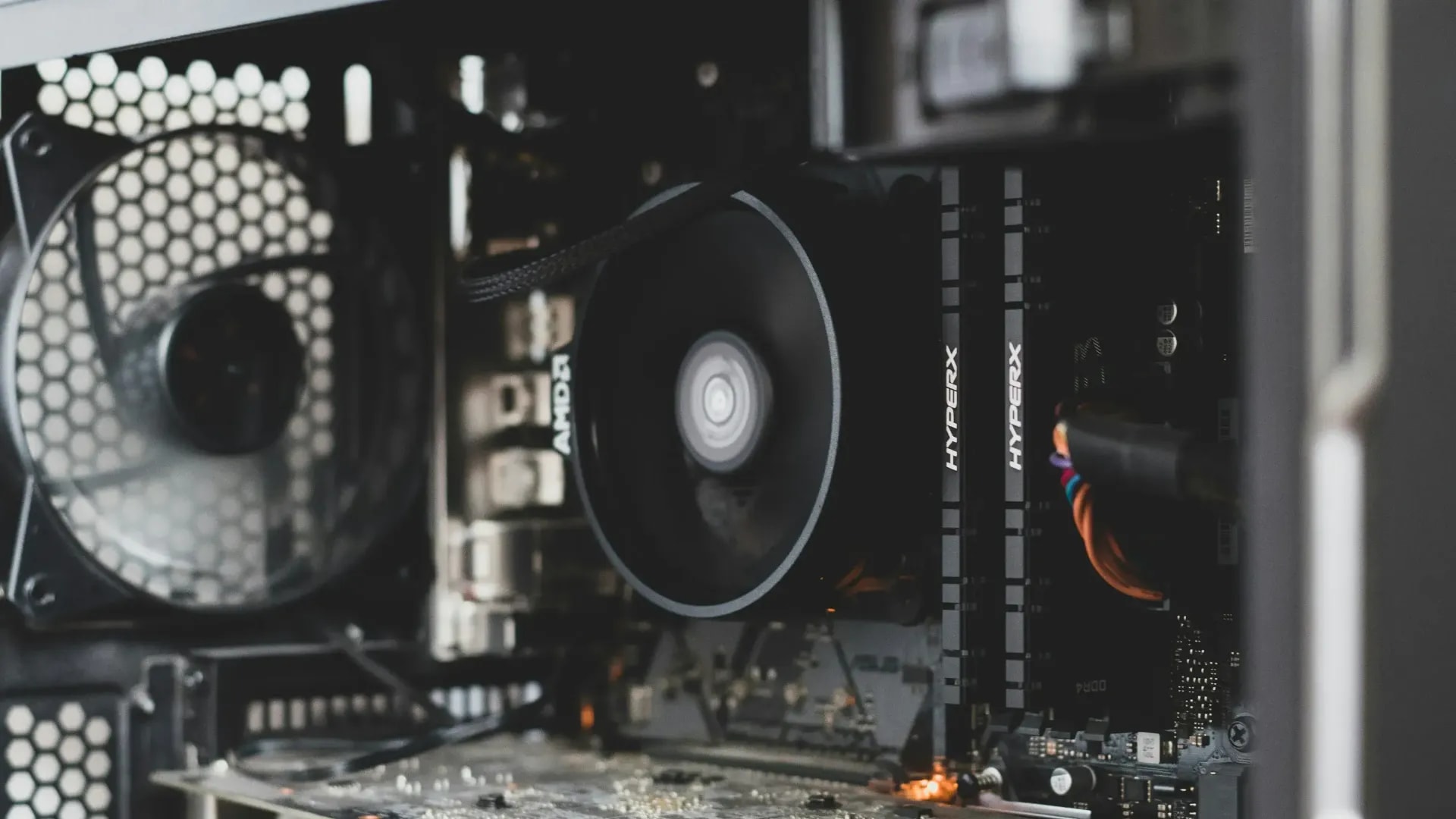
With AI and modern apps, is 16GB of RAM enough? We explore why 32GB is quickly becoming the new standard for future-proof computing.
If we go back to the 2010s, having 8GB of RAM in a laptop or PC felt like a luxury. Multitasking was smooth, and heavy applications could still be handled quite well. However, the technological landscape changes quickly. Entering the 2020s, 16GB capacity rapidly became the new minimum standard, even for casual users.
Now, we are on the verge of the next major shift. A 32GB RAM capacity, once considered overkill and only for high-end professionals, is slowly becoming the new reasonable standard. This article will discuss why the 16GB era might be coming to an end and why 32GB is a smart investment for the future.
The main reason behind this rocketing need for RAM is simple: artificial intelligence (AI) and the complexity of modern applications.
Microsoft itself has stipulated that Copilot+ PCs (what they call "AI PCs") require a minimum of 16GB of RAM. This is a strong signal that to run more advanced AI features in the future, especially AI that runs locally on the device (not in the cloud), the RAM requirement will continue to increase.
However, it's not just AI. Our habits in using computers have also changed. Web browsers like Google Chrome or Firefox, which are notoriously memory-hungry, are often the center of our activities. Opening dozens of tabs while running other applications has become commonplace.
Personally, I use a laptop with 32GB of RAM. At first, I thought it was excessive. However, in my normal workflow—writing this article while opening several research tabs, design applications, and a few other tools—my RAM usage often reaches 15 GB to 17 GB.
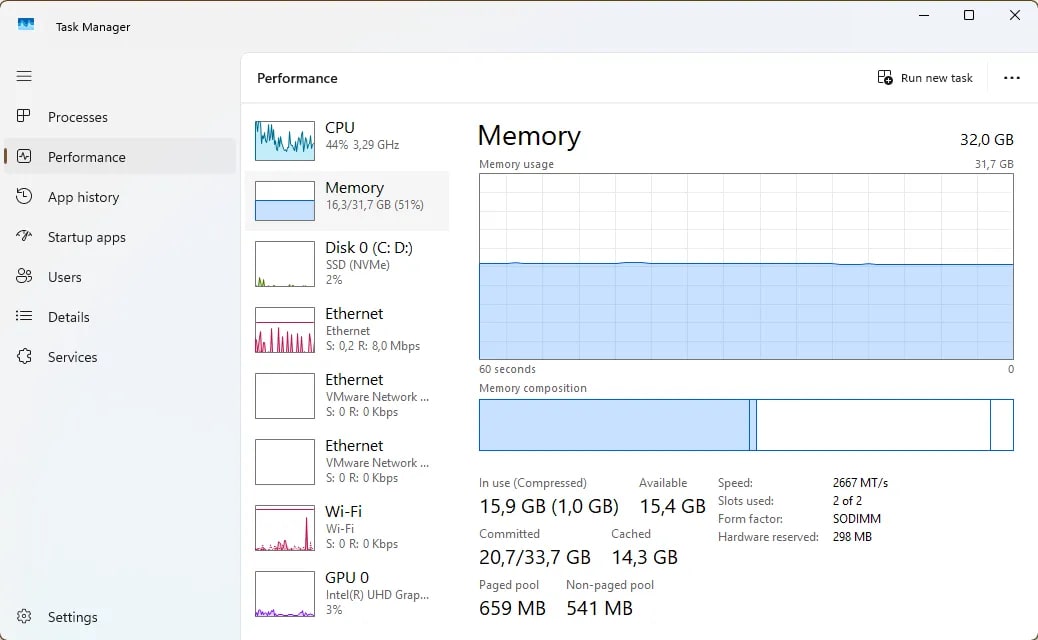 This is real proof. Even for productivity work, 16GB of RAM already feels very tight.
This number shows that with 16GB of RAM, my system would already be slowing down because it has to use the swap file on the SSD.
Beyond daily work, these two areas are aggressively pushing the limits of RAM requirements.
This is real proof. Even for productivity work, 16GB of RAM already feels very tight.
This number shows that with 16GB of RAM, my system would already be slowing down because it has to use the swap file on the SSD.
Beyond daily work, these two areas are aggressively pushing the limits of RAM requirements.
 Games like Black Myth: Wukong are pushing hardware standards, including RAM.
The development of RAM technology also supports this shift. The latest standard, DDR5, is not only faster but also supports much higher densities.
Is 16GB unusable? Of course not. For now, 16GB is still a safe spot for most users. However, looking at the trends in AI, software complexity, and multitasking needs, that capacity is starting to feel "just barely enough."
If you are building a new PC or buying a laptop with the intention of using it for the next 5 years, choosing 32GB of RAM is a very wise investment. It will ensure your device is not only relevant but also remains responsive when facing the next wave of applications and technology.
What do you think? Have we entered an era where 32GB is the new standard? Share your opinion in the comments section!
Games like Black Myth: Wukong are pushing hardware standards, including RAM.
The development of RAM technology also supports this shift. The latest standard, DDR5, is not only faster but also supports much higher densities.
Is 16GB unusable? Of course not. For now, 16GB is still a safe spot for most users. However, looking at the trends in AI, software complexity, and multitasking needs, that capacity is starting to feel "just barely enough."
If you are building a new PC or buying a laptop with the intention of using it for the next 5 years, choosing 32GB of RAM is a very wise investment. It will ensure your device is not only relevant but also remains responsive when facing the next wave of applications and technology.
What do you think? Have we entered an era where 32GB is the new standard? Share your opinion in the comments section!
The Main Trigger: The Explosion of AI and Modern Applications
Zoom
Gaming & Productivity: When 16GB is No Longer Enough
Modern Gaming Needs
AAA games with photorealistic graphics require high-resolution assets and textures that must be loaded into RAM for quick access. Ambitious upcoming games like Black Myth: Wukong even set 16GB of RAM as a minimum requirement. For a smooth gaming experience at the highest settings, 32GB will provide much safer headroom.Zoom
Advanced Multitasking
For professionals, the workflow is much more complex:- Running an IDE (Integrated Development Environment) like VS Code.
- Using virtual machines (VMs) or containers (Docker).
- Streaming, video calling, and screen recording simultaneously.
- Opening giant design files or spreadsheets.
The Evolution of RAM Technology Itself
- DDR3: Maximum of 8GB per stick.
- DDR4: Maximum of 32GB per stick.
- DDR5: Supports up to 128GB per stick.
Conclusion: 32GB as a Future-Proof Investment
References
Topics
Topics in this article
Explore related topics and continue reading similar content.
Share this article
Discussion
Preparing the comments area...